Why did Beijing reject the G20 statement?
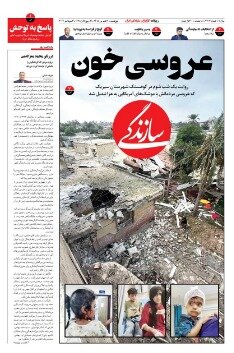
Sazandegi assessed China’s refusal to join the G20 statement. The meeting was supposed to focus mainly on economic issues, but disagreements over the Strait of Hormuz once again exposed geopolitical rifts among major powers. The G20 countries emphasized the need for safe and free navigation in the Strait of Hormuz, but China declined to endorse the position.
Beijing’s objection cannot be reduced to a dispute over the strait’s current situation. One major reason is China’s concern about creating a legal and political precedent that might later be used against it. Alongside this legal concern, China’s relationship with Iran carries special weight in Beijing’s calculations. As one of the world’s largest energy importers, China does not want to sacrifice its economic and political ties with Tehran for a framework shaped by Washington. China’s stance at the G20 shows that even under increased US pressure on Iran, Washington faces serious obstacles in forming a global consensus on Hormuz security.
Shargh: Jordan under pressure
Shargh analyzed Jordan’s difficult current situation, writing that Iran’s repeated attacks on US military facilities in Jordan reveal something deeper than a mere defensive weakness: the gap between the Jordanian government’s security dependence on Washington and a public angered by the Gaza war could turn Jordan into the most sensitive link in America’s regional presence. Iran’s multiple attacks have once again placed Jordan at the center of one of the Middle East’s most delicate security equations. The recent attacks show that what appears from the outside to be a stable partnership is internally burdened with rising political costs. Many Jordanians see the US military presence not as a shield against regional crises but as a factor dragging their country into Washington’s conflict with Tehran.
Ham‑Mihan: Israel opposes any understanding between Tehran and Washington
Ham‑Mihan interviewed Javid Ghorban‑Oghli, a senior Middle East analyst, about Trump’s failure to uphold the Islamabad memorandum. Returning to the memorandum is necessary for both Iran and the United States. However, it is clear that Israel and its powerful domestic lobby oppose any agreement between Iran and the US or any negotiated exit from the war. For Netanyahu, an Iran–US agreement would amount to political death. Given Trump’s narcissistic personality, Netanyahu’s team currently dominates US policy. Therefore, Iran must adopt a strategy that deepens existing rifts between Tel Aviv and Washington and deprives Israel of the ability to push for military adventurism. Everyone knows Israel cannot sustain even a week of war with Iran without US support. The memorandum of understanding was a major political‑diplomatic gain for Iran. In other words, the significant concessions it granted Iran reflect the inability of the opposing side (the U.S. and Israel) to achieve their projected military objectives in the war.
Arman‑e-Melli: Keeping the oil route
Arman‑e-Melli highlighted the importance of maintaining relations with China, especially in the oil sector. The paper wrote that securing China’s support does not necessarily mean aligning political slogans; rather, it means reducing the costs created by each side’s behavior. If China is convinced that Iran guarantees the security of China’s oil flow—and China, in turn, ensures that this flow is not targeted by sanctions or blockades—then a genuine exchange of power emerges. If supplying China’s oil is seen as one of the most important pillars of bilateral relations, one can imagine a solution in which China gains direct interests in designing and maintaining the oil‑transfer chain from Iran to its destination. Iran can ask China to place its power behind the oil flow, but in return, Iran must make protecting that flow more beneficial for China than abandoning it. Thus, the Iran–China strategic partnership can be turned into a practical, measurable mechanism rather than a mere political phrase.
Hamshahri: America’s economic–operational crisis
The war has shown that the issue of cost is not limited to the price of each missile. To counter Iran’s missile and drone attacks, the US has sometimes had to use multiple interceptors against a single threat. This creates both economic and operational problems: multimillion‑dollar interceptors are being used against threats that are often far cheaper. Thus, the more Iran can increase the volume of its attacks, the greater the pressure on America’s air‑defense stockpiles. US strikes near the Strait of Hormuz and Iran’s missile attacks on US positions in Jordan have revived the question of how much Washington can escalate its operations. The most important consequence of this crisis for Washington may not appear on Iran’s battlefield but in the calculations of China and America’s East Asia allies. If Beijing concludes that a prolonged Middle East conflict could drain US stockpiles and limit Washington’s ability to respond in the Pacific, the ammunition crisis could shift from a logistical problem to a strategic variable.
Leave a Comment